MYTH Cultural society is the organizer of the Kochi International Short Film Festival of India.
MYTH is an organization which homes a group of young and vibrant film enthusiasts who are committed in creating parallel spaces for independent cinema and devoted to spreading of the knowledge of the modern visual art form to all interested.
Cultural Británico сердечно приветствует вас и открывает прием заявок на «XII МЕЖДУНАРОДНЫЙ КИНОФЕСТИВАЛЬ ДЛЯ ДЕТЕЙ, CINI 2026», который пройдет в Лиме, Перу, с 4 по 8 февраля 2026 года.
Этот фестиваль проводится в зрительных залах Британского культурного центра, расположенных в округах Сурко, Сан-Мигель, Сан-Борха, Пуэбло-Либре, Сан-Мартин-де-Поррес, Санта-Анита, Сан-Хуан-де-Луриганчо, Камачо и Мирафлорес.
Все показы, которые пройдут во время «XII МЕЖДУНАРОДНОГО КИНОФЕСТИВАЛЯ ДЛЯ ДЕТЕЙ, CINI 2026», будут бесплатными для широкой публики.
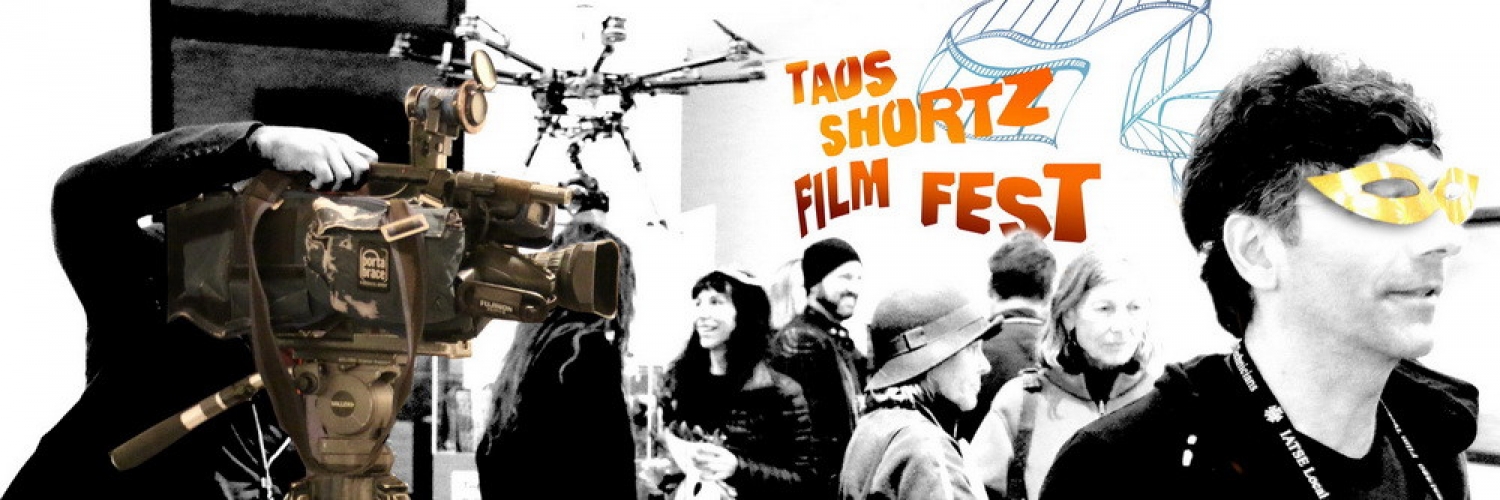
Фестиваль Taos Shortz Film Fest продолжает приносить миру короткометражное кино мирового класса и предоставляет кинематографистов возможность продемонстрировать свою работу, участвовать в семинарах, панелях и поддерживать связь с другими кинематографистами, медиа-компаниями, продюсерами и дистрибьюторами.
Мы снова ищем в мире выдающиеся короткометражные фильмы. Мы ищем интересные истории, образцовую постановку и кинематографию, а также потрясающие фильмы в целом! Таос Шорц был одним из «50 кинофестивалей, стоимость которых составляет вступительный взнос» журналом MovieMaker этой весной, и может похвастаться тем, что он является звездным кинофестивалями в стране.
Фестиваль короткометражных фильмов Таоса снова... ищет мир для выдающихся короткометражных фильмов. Мы ищем интересные истории, образцовую постановку и кинематографию, а также потрясающие фильмы в целом! Один из «50 кинофестивалей стоит вступительный взнос» журнала MovieMaker, Таос Шорц может похвастаться тем, что является звездным кинофестивалями в стране.
Мы продолжаем придавать миру короткометражный кинотеатр мирового класса и предоставлять кинематографистов возможность продемонстрировать свою работу, участвовать в семинарах, панелях и поддерживать связь с другими кинематографистами, медиа-компаниями, продюсерами и дистрибьюторами.
У тебя есть сказка, чтобы рассказать? Секрет для раскрытия? Истину, которая кричит, чтобы быть услышанной? Если вы думаете, что у вас есть то, что нужно, отправьте свой фильм.
Даты фестиваля: 19 - 21 марта 2021
www.taosshortz.com
After a mini-hiatus, Short Com will be making it's return in 2019 in Edinburgh at the Cameo Cinema.
Short Com is a short comedy film festival that has grown from strength to strength from humble beginnings back in 2011, where it started in Manchester.
Short Com prides itself on the quality of its programme and the range of comedy stylings it has screened. The most emphatic thing we look for in a film is its content, its ability to make an audience laugh or smile. Short Com has screened films from BAFTA nominated films and multiple award winners to simple home made films that have warmed and vastly amused audiences.
Short Com has screened during the Edinburgh International Fringe Festival, in London and for the first time in Bristol and finished its run and closed with its award ceremony at the Glasgow Short Film Festival. One of the largest short film festivals in the UK.
Why submit to Short Com? Short Com prides itself on the quality of its programme. There is a great deal of honour to selected filmmakers who make it to the annual best of screenings. Plus it will be taking place during the world's largest arts and culture festival. In the past we have been sponsored by Blackmagic Design, Final Draft and Festival Formula all donating fantastic prizes for winning films in our category awards section. We will be looking to work with new brands to continue this tradition and bring some excellent prizes.
To get an idea of what we have screened in the past, you cans see some of the previous years winners in the links below.
http://www.shortcom.co.uk/wp/2014-2015-best-of-select-and-winners/
http://www.shortcom.co.uk/wp/2015-international-selection/
http://www.shortcom.co.uk/short-com-festival/short-com-2016-best-of-programme/
*Feature Films
We have the opportunity to extend our programming to feature films. This depends on the quality of the film and appeal it can bring. Features must be a Scottish film premier.
Contact Chris Aitken directly at info@shortcom.co.uk for enquiries.
CINELEBU стремится предоставить чилийским и международным авторам аудиовизуальных материалов платформу для продвижения, коммерциализации и распространения художественных, документальных и анимационных короткометражных фильмов. Фестиваль способствует производству аудиовизуальных материалов высокого технического и художественного качества, а также способствует налаживанию связей, расширению деловых возможностей, поддержке и обмену текущими и будущими работами. Он также способствует обучению, обучению и развитию аудитории.
Фестиваль пройдет с 22 по 30 мая 2026 года в регионе Биобио, Чили, а основные площадки — в Лебу (столице провинции Арауко) и Консепсьоне. На фестивале также будут представлены виртуальные кинотеатры как на национальном, так и на международном уровне.
The Maryland International Kids FilmFest is an outgrowth of the children's programming at the annual Frederick Film Festival -The F3- held each year in June.
Since the beginning, the F3 has been dedicated to providing not only a unique film-going experience in the region by providing premiere films as well as films not likely to be screened in the area, but also providing children's programming on Saturday mornings.
This portion of the F3's programming was so popular that the festival organizers felt an entire festival of great film should not just be reserved for adults, but be provided for the younger set as well. Often, films and programs aimed at children seem...childish. Not challenging. Safe. And far too often, not entertaining. Especially those constructed to be long commericals in the guise of young people's programming.
The Maryland International Kids FilmFest is committed to bring high-quality, challenging, and, most importantly, ENTERTAINING movie programing...in the form of short films as well as feature length films...to the state. And we can pretty much guarantee that you'll not see any film with a fast-food restaurant tie-in product.
Other film events during the MIKFF will highlight the venue itself. The Weinberg Center for the Arts is an historic building and a jewel valued by the entire state and the festival is proud to have the opportunity to show movies in one of the grandest movie palaces in the area. Take some time to walk around the building while you're here and discover what an extraordinary thing going to the movies once was.
Luxor African Film Festival is organized by Independent Shabab Foundation, which is a civil and nonprofit organization cooperates with the culture developed fund & other entities . The festival is organized under the auspices of significant Egyptian Ministries and other organizations.
- The first festival for African Cinema in Egypt since the start of the film industry
- The first international film festival in Upper-Egypt
- The first festival featuring outdoor screenings in Upper-Egypt
- The first festival fully organized by an Egyptian civilian NGO
- The first festival featuring the participation of all African countries and hosting more than 100 guests from Africa, Europe and the Americas
BERLIN UNDERGROUND FILM FESTIVAL 2015
The Berlin Underground Film Festival is part of a series of online film festivals created by the Clockwork Film Institute. Its main goal is to embrace all that is considered subversive, controversial and eccentric when it comes to underground filmmaking.
BUFF’s awards will be divided between four categories: Official; Press; Internet and Popular Jury.
All of the awards will be posted in the mail and will be provided by the festival (including postage).
Welcome to Berlin Underground Film Festival, it will be a great pleasure considering your film for our festival and eventually helping it be known by filmmakers and film lovers around the world.
Live Entertainment, LLC, Russia in co-operation with EVENT FILM, Canada proudly present an annual festival event – International Horror, Action and Fantastic Film Festival & Awards "DROP".
The festival is being annually held in the city of Moscow since the year 2011 and contains 4 events:
- opening screening
- closing awards ceremony
- master-class and Q&A with movie stars
- film festival competition program screenings in cinema theatres
The Awards ceremony takes place in a big concert venue (changing every year) and consists of the show program and the ceremony of granting awards which is divided into the following jury voting categories:
- awards granted to local film distribution companies for the blockbusters screened in cinema theatres of Russia in the reported year;
- awards granted to young directors and producers as competition program. The category is called “Hope for Survival”;
- awards granted to World stars for the contribution to horror genre
The Awards ceremony is always visited and recorded by a large number of mass media.
The Master-class is a so-called Q&A horror convention held in a cinema theatre in a form of a question-answer session between the star guests of the festival and the audience + autograph session. The event usually ends with a premier film screening.
The festival program is a week non-stop screening of new movies in several Moscow cinema theatres. The films-participants of the competition program are being selected by the festival’s jury. Submissions are being analysed and accepted by the festival's organization committee during the whole year.
The festival's schedule usually also contains a pre-party and an after-party arranged for the honored guests and winners.
The TV version of the festival is televised by Tricolor TV platform.
The festival specializes in all sub-genres of horror and action film industry, i.e.: cartoon horror, comedy horror, psychological thriller, trash horror, zombie horror, giallo, slasher, suspense, detective, action, fantasy, sci-fi etc. Starting from the year 2013 the festival also specializes in survival horror video games sphere.
The festival is annually visited in person by World-known honored guests. The previous years’ guests were: Eric Roberts, Stuart Gordon and Bryan Yuzna, Jodelle Ferland, Costas Mandyllor & Tobin Bell, Lloyd Kaufman, Akira Yamaoka, Marco Ristori and Luca Boni, Preity Uupala, Yeppe Laursen, Silje Reinaamo, Daniel Licht, A.J. Annila, Leonid Kuravlev, Igor Zhizhikin, Oliver Robins, Corbin Bernsen, Lauren Esposito, John Kassir, James Russell, Mick Garris, Shawn Hall, Liesl Ahlers, Kyle Catlett, Lina Leandersson, Richard Cutting, Helen Crevel, Javier Botet, SWERY, Adnan Koc, Naomi Grossman & Ben Wolf, Sergio Stivaletti
...and many others
A great number of star winners also annually send their exclusive video messages which are being screened during the ceremony.
A more detailed information about the festival can be found on the English version of our web site, on Wikipedia and in social media.
New York Film Awards is a new film festival created by the Clockwork Film Institute.
It is part of a series of online festivals and its main goal is to embrace all kinds of underground filmmaking from around the world.
NYFA’s awards will be divided between four categories: Official; Press; Internet and Popular Jury.
All of the awards will be posted in the mail and will be provided by the festival (including postage).
Welcome to the 10th Edition of ViBGYOR International Short & Documentary Film Festival, to be held in Thrissur, Kerala, India from February 16-22, 2015. You may submit your films (documentary/ short-fiction/ music video/ animation/ spot/ experimental) for SELECTION PREVIEW. An eminent panel of Jury will select the final set of films for screening at ViBYOR-2015.
CALL FOR ART FILM MAKERS.
After last year's big success DELETE TV is again selecting remarkable experimental short films and video art which will be broadcasted on our partner TV-Channel in Austria and several video art platforms in collaboration with the selected artists. Further more, the most eye and mind-bending films will make it to Delete TV Screenings all over Europe.
Delete TV investigates the captivating nature of images with the specific aim to look up to new approaches by taking distance from the conventional film making method.
The program opens a window to the world of art and offers strong, wild and uncensored works from upcoming artists and film-makers. Delete TV highlights contemporary issues in a global context, highly educational and deeply focused on intercultural exchange and visibility.
Between the lines and under the make up of a brave new world.
Pune Short Film Festival
Фестиваль AVIFF представляет программу фильмов художников в Каннах в период Каннского кинофестиваля 4 дня в мае.
Концепция: показать еще одно «кино» и представить аудиовизуальные произведения зрителям фестиваля и профессионалам.
Выбранные работы должны быть созданы художниками менее 2 лет и никогда ранее не выставлялись во Франции.
Программа, представленная в Каннах, затем будет запрограммирована в течение года в партнерских местах образования и культуры: фестивалях, музеях, Центре современного искусства, фондах, университетах, школах... и это в мире, в Европе и Франции.
При поддержке Министерства культуры, региона Прованс, Альпы, Лазурный берег, Фонда Анхеля Оренсанца в Нью-Йорке, а также частных и государственных партнеров фестиваль AVIFF уже 13 лет работает над продвижением фильма художника и его распространением в пользу свободы творчества во всем мире и выражение творческих способностей.
Приглашаются все художники-режиссеры независимо от формата ваших фильмов и их продолжительности.
“Women’s Director International Film Festival – 2016” (Season - 3)
About WDIFF – The Annual Women's Director International Film Festival (WDIFF) is one of the few international film and arts festivals dedicated to women's. This three-day extravaganza, consisting of indoor and outdoor red carpet film screenings, fashion shows, workshops, and of course Shopping Stalls. It's a celebration of women and all who love women. WDIFF films and screenings are selected and hosted by filmmakers, professors, and other notable figures in the world of film. In addition to exhibiting the next new wave of women filmmakers, the WDIFF also makes time to pay tribute to films by women with historical significance.
In past years festival gains reputation & regarded as among most prestigious festival in India. The festival grows over the years & attracts filmmakers from across the India & across the world.
Mission & Objective - The mission of the Women's Director International Film Festival (WDIFF) is to empower women's artistic vision internationally. With women representing only 7% of filmmakers, we would like to increase the number of women in the industry and support those women who are actively involved by assisting filmmakers and artists with the development of their craft.
The Norwich Film Festival was recently chosen by The Metro as one of "the top UK film festivals you need to know about", and in 2017 became a BIFA (British Independent Film Awards) qualifying short film festival.
We have been running since 2009 and over the years we have hosted over 75 events and screened over 500 films to the public.
The Norwich Film Festival has an amazing array of celebrity patrons including Stephen Fry, Tim McInnerny, Olivia Colman, Julian Jarrold, Brian Cox & John Collee. We also work hard to recruit industry judges (see below) who are all eager to watch our nominated films.
Our 2018 film judges will only view the NOMINATED Films selected and the Norwich Film Festival will then allocate which film categories that judges will watch.
The 2018 film judges are (subject to work commitments):
- Alfred Molina (World Famous Actor)
- Denise Parkinson (Director of Entertainment at the Telegraph)
- Gavin Humphries (BAFTA nominated and Cannes winning shorts producer)
- Andrea Gibb (BAFTA Nominated Screenwriter)
- Matt Wilkinson (Award Nominated Producer)
- Emma Freud (Script Editor & Associate Producer)
- Eddy Joseph (Two time BAFTA winning Sound Editor)
- Mark Everson (Award winning Editor)
- Ferne Pearlstein (Award winning Director, Cinematography & Producer)
- Andrew Deane (Emmy Winning Producer and Managing Partner at Industry Entertainment)
- Steven Hall (DOP and BAFTA Judge)
As well as screening the selected films to the public, the winning films will also receive an award, a certificate, a cash prize, and a selection of other industry related prizes.
Our social media gained well over 2 million impressions on Twitter alone last year, and we will promote your film to a global audience.
After five years of a successful run as the New York City International Film Festival and after many of our films got distribution, we decided to create NYCIFF-St. Lucia edition. We want to open another door for filmmakers from around the world, and establish St. Lucia as a center for the film industry, while highlighting unknown talents from the Caribbean.
К участию приглашаются кинематографисты со всего мира.