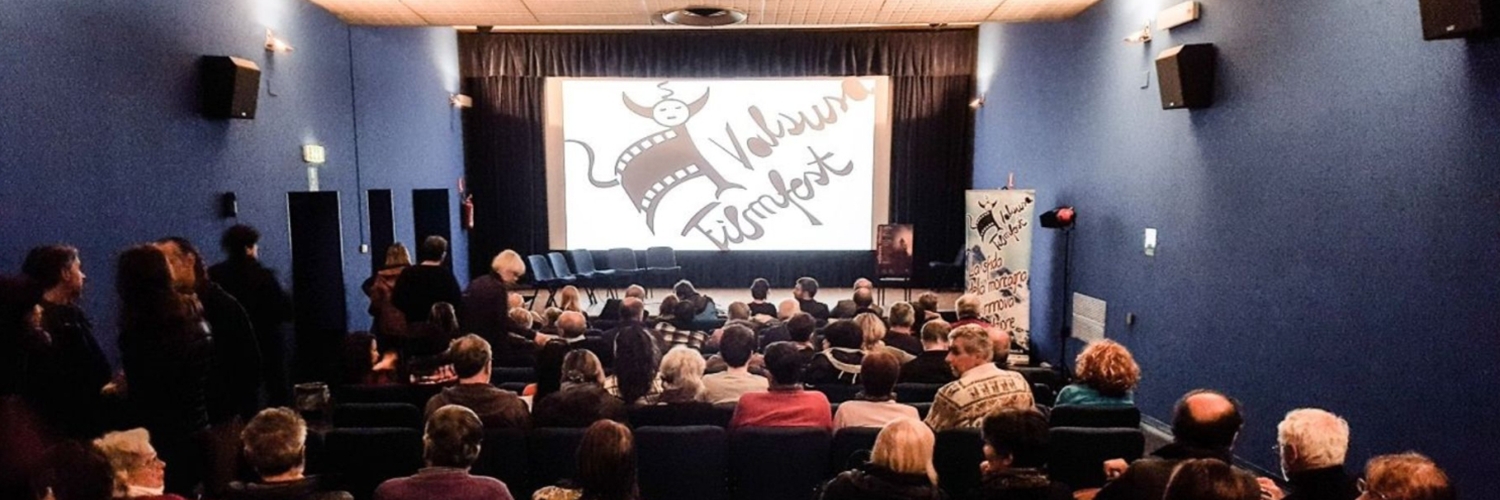
The Valsusa Filmfest celebrates its thirtieth anniversary and has published on its website, www.valsusafilmfest.it
, the call for entries for its 30th edition, scheduled to take place between March and April 2026 in several municipalities of the Susa Valley.
This milestone marks an important achievement for a festival that, since 1997, has become a point of reference for the local community and for many filmmakers who, through cinema, have explored themes of memory, territory, rights, the environment, and social change. Thirty years of the festival represent a cultural and civic journey that has engaged generations of students, volunteers, artists, and audiences. A journey that continues today with the same founding spirit: promoting culture, fostering critical thinking, building aware communities, and reflecting on the social and political changes of our time.
Once again, the heart of the Valsusa Filmfest is its film competition, open to emerging and established filmmakers and divided this year into six sections: Cortometraggi, Disertare, Fare Memoria, Le Alpi, Videoclip Musicali, Green Screen.
The new section of this edition is Disertare, developed in collaboration with the Civilian Victims of War Association – Piedmont and Aosta Valley section, and dedicated to works that tell stories, experiences, and testimonies of nonviolence, rejection of war, antimilitarism, and civil disobedience, with particular attention to the contemporary issue of military spending and new forms of war propaganda. This section closely reflects the festival’s dedication to Fabrizio De André and its strong civic identity.
Alongside this new section, the competition includes the following categories: Cortometraggi, a free-theme section welcoming fiction films with a maximum duration of ten minutes; Fare Memoria, organized in collaboration with ANPI Valle di Susa, which invites works focused on the Italian Resistance or on contemporary interpretations of its values; Le Alpi, dedicated to exploring the mountain as a place of identity, community, environment, and adventure, with films up to thirty minutes in length; Videoclip Musicali, aimed at promoting visual and musical originality; and Green Screen, developed in collaboration with IISS Des Ambrois of Oulx, giving voice to works focused on environmental sustainability and the climate challenges affecting both the present and the future of our planet.
The full regulations, technical requirements, and details on awards are available on the website www.valsusafilmfest.it
.
To participate, filmmakers must register on the dedicated platform https://concorsi.valsusafilmfest.it
, where submissions can be uploaded until 11:59 pm on February 1, 2026.
DATES AND THEME OF THE EDITION DEDICATED TO FABRIZIO DE ANDRÉ
The 30th Valsusa Filmfest will take place between March and April 2026 in numerous municipalities of the Susa Valley, featuring screenings, cultural and artistic events that involve schools, associations, and many individuals, thanks to a network of relationships that over time has made the festival a permanent laboratory of active citizenship and critical reflection.
The 30th edition is dedicated to Fabrizio De André, the “bard and poet of the marginalized,” an artist who gave voice to injustice, marginalized communities, and the fragile beauty of nature. This dedication renews the festival’s connection to its original identity, born thirty years ago from the desire to create a space for culture, participation, and collective memory.
In 1997, Armando Ceste – a Turin-based director and visual artist, one of the founders and the first artistic director of the Valsusa Filmfest, who passed away in 2009 – designed what is still the festival’s logo today: a symbol inspired by Native American imagery (Unkathae), half North American indigenous deity and half strip of film. Ceste also created the image for the first festival poster, depicting a Native American on horseback seen from behind, evoking the beginning of a long journey often undertaken in a “stubborn and contrary direction.”
Drawing on this visual intuition, the Valsusa Filmfest now renews its journey toward the future through the figure of the legendary “Faber” and the image from the cover of one of his albums, Fabrizio De André (1981), commonly known as L’Indiano, which features an image taken from the painting The Outlier (1909) by Frederic Remington. In this image, the Native American on horseback is portrayed frontally: a proud figure moving toward us, evoking a people who resist, a memory that returns, and a path that continues—just like the journey of the festival throughout its long history and into this new edition.